
Insights
Notes on semiconductor and display process engineering — process conditions, device characteristics and defect analysis.
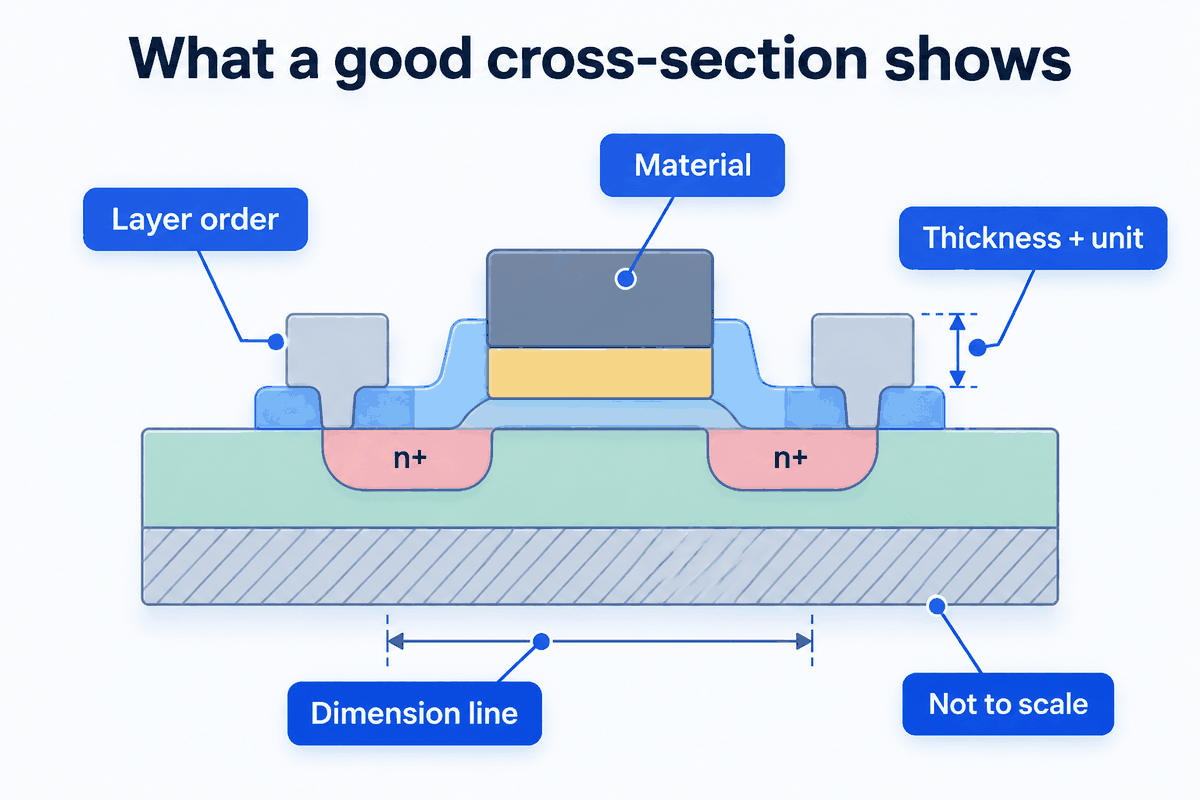
Semiconductor Device Cross Section: How to Draw One That Reads at a Glance
What a semiconductor device cross section must show — layer order, materials, thickness with units, dimension lines, a scale note — and when to switch from 2D to 3D.
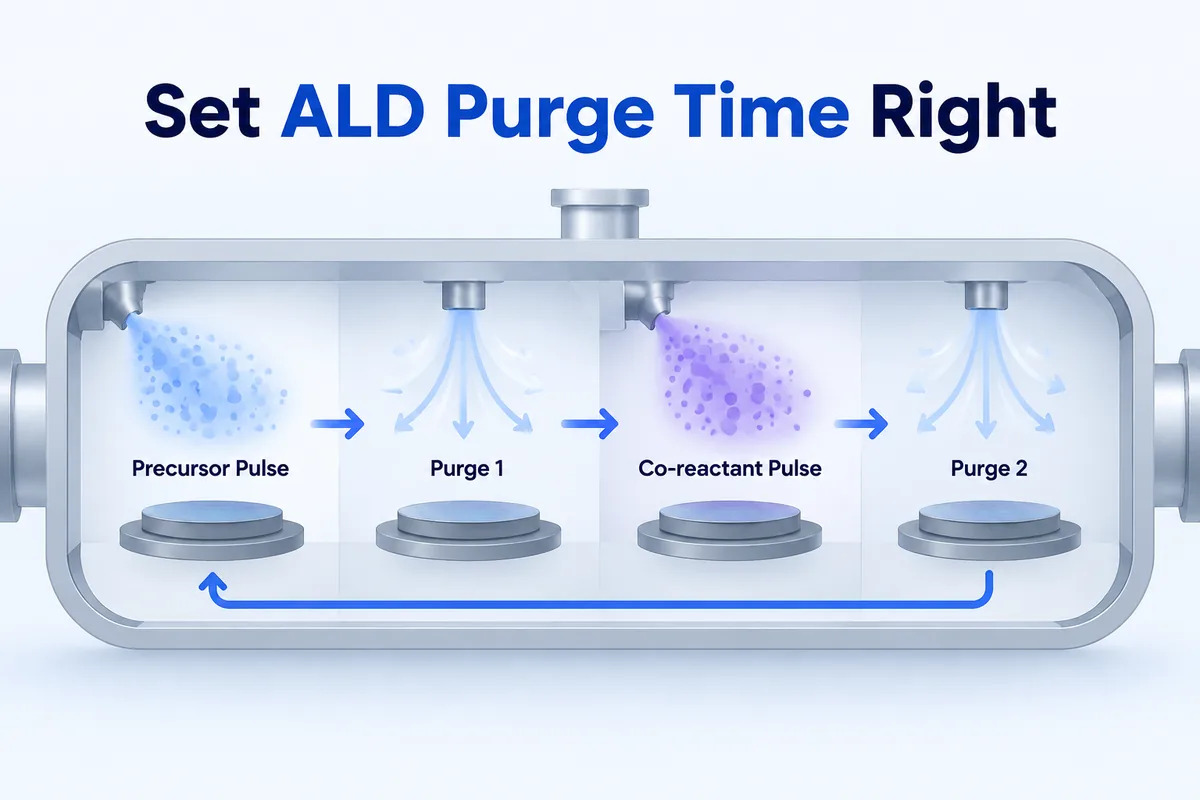
ALD Purge Time: How Long Is Long Enough?
Learn how to set ALD purge time by finding the saturation plateau and why the right value changes between tools.
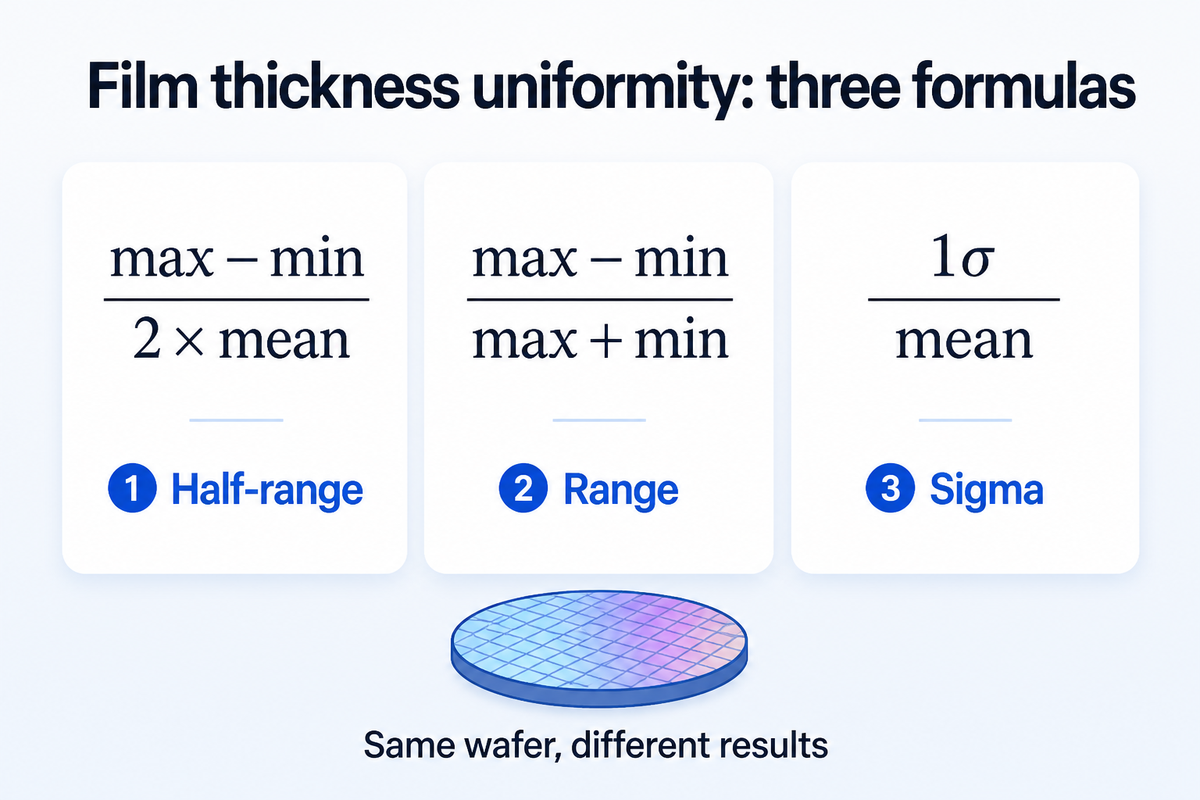
Film Thickness Uniformity Formula: Which One Your Number Came From
Three film thickness uniformity formulas give three different percentages from the same wafer. Learn which one your tool uses and how to report it.
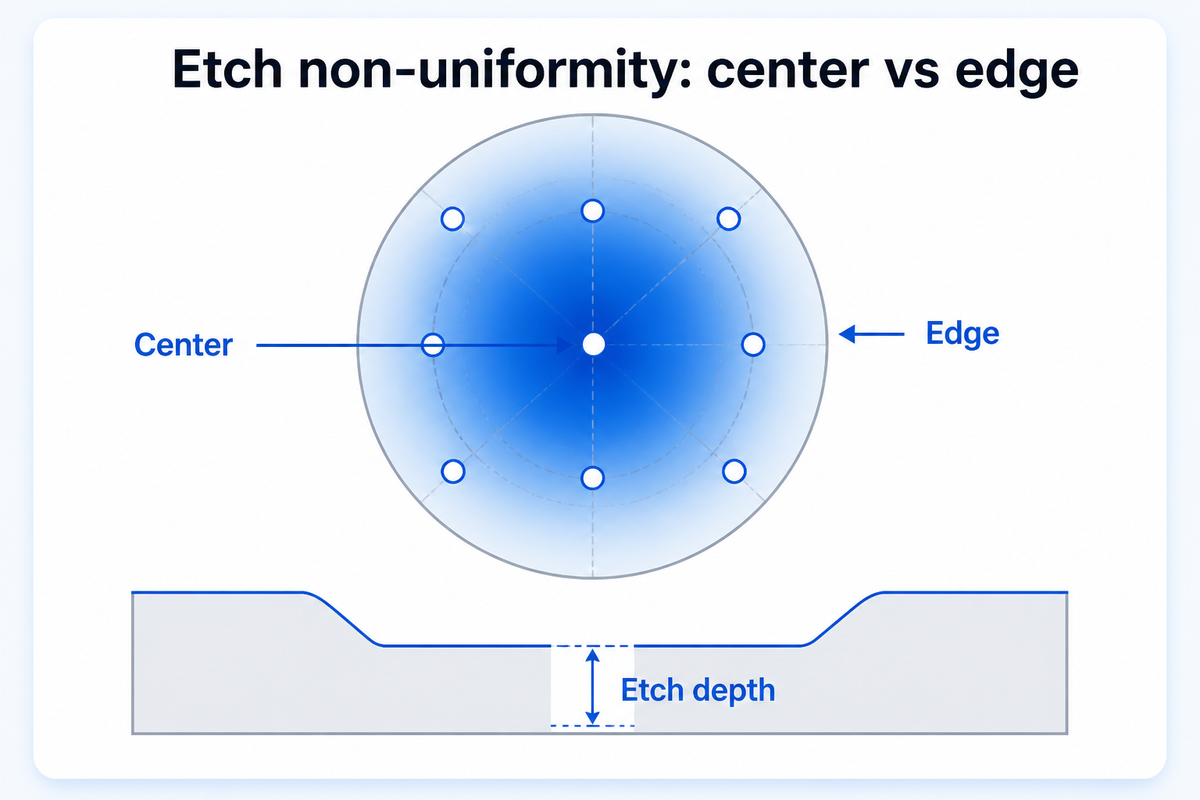
Etch Non-Uniformity: How to Find Which Knob Is Driving It
Etch non-uniformity has many possible causes, but at any given operating point one variable usually dominates. Identify it through sensitivity analysis, then confirm on wafers.
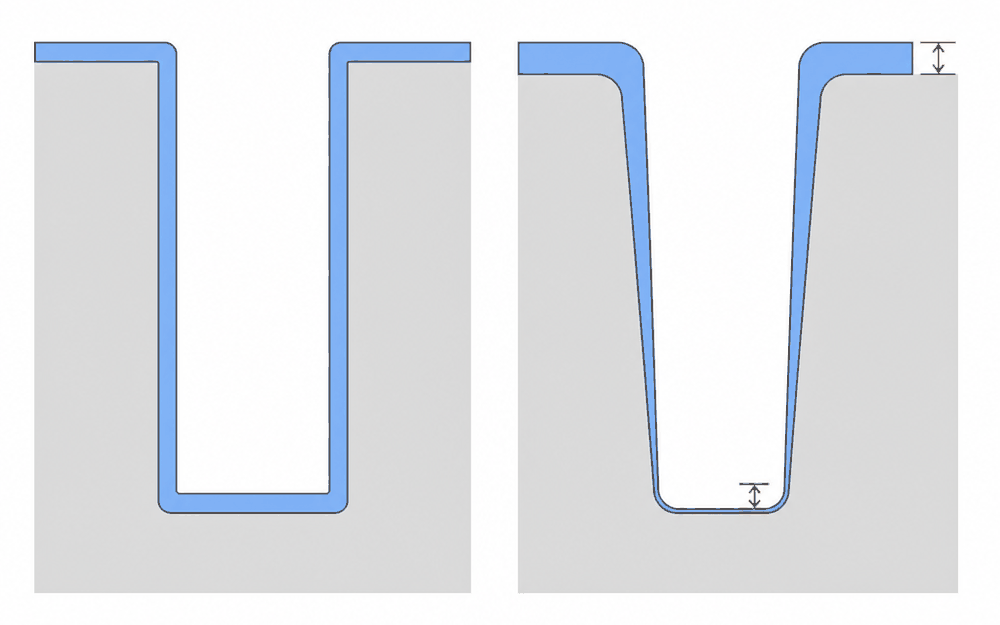
Step Coverage in ALD: Why the Bottom of the Trench Thins First
In ALD, step coverage drops from the bottom up at high aspect ratio. Which half-cycle runs short, why PEALD falls off earlier, and what to adjust first.
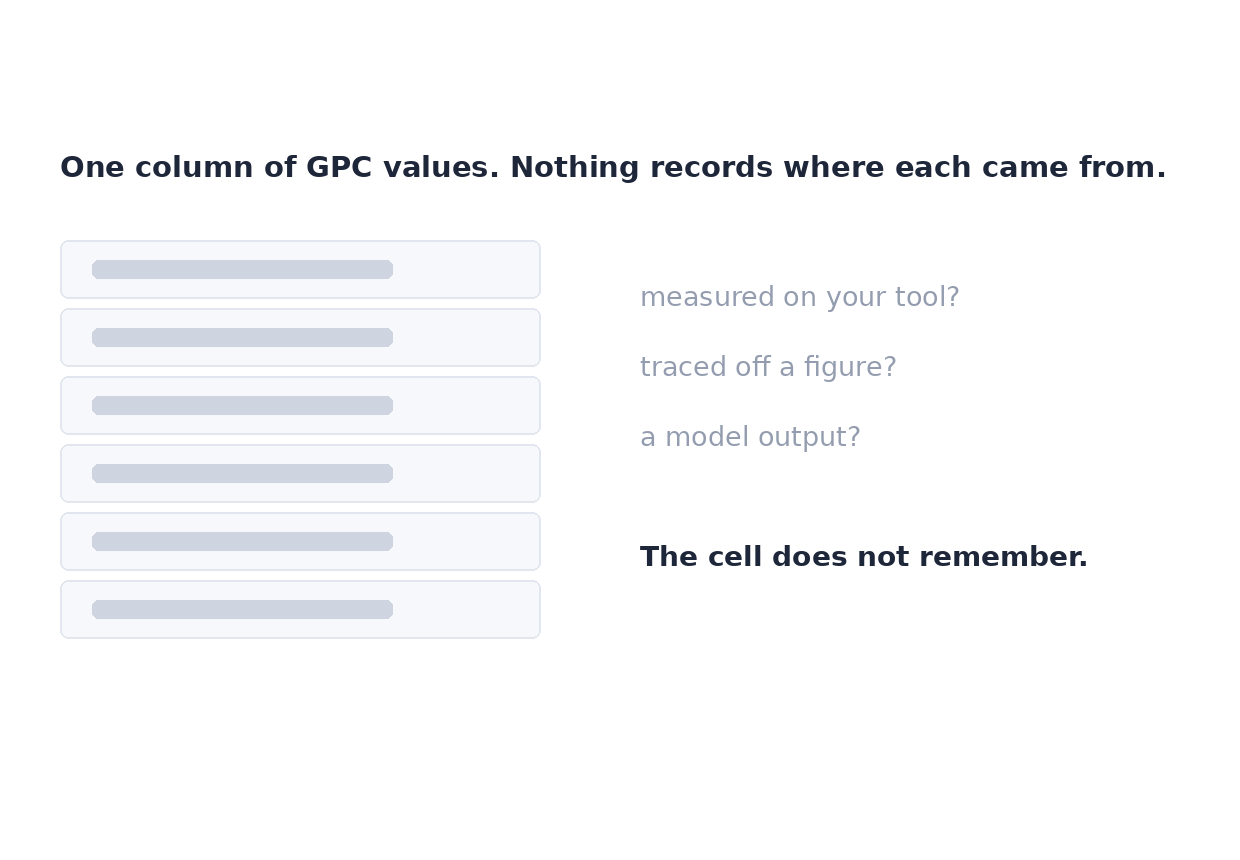
Is That ALD GPC Number Measured or Predicted?
The unit is the same either way. Before you place an ALD GPC value next to your own, check whether it was measured on a wafer or produced by a model — and write that down next to the number.
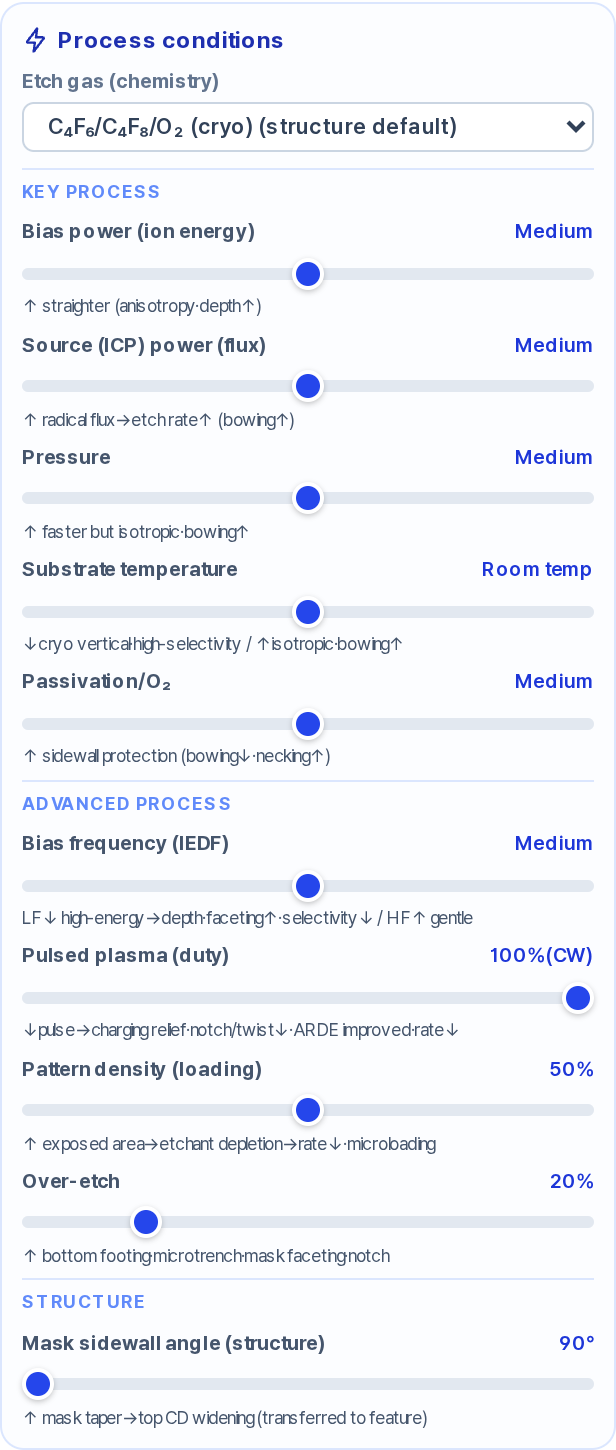
How to Actually Reduce the Number of DOE Splits
Narrowing the range does not cut the run count. What reduces the number of DOE splits is dropping factors and cutting levels — and how to read a model-based screening pass before you spend wafers on it.
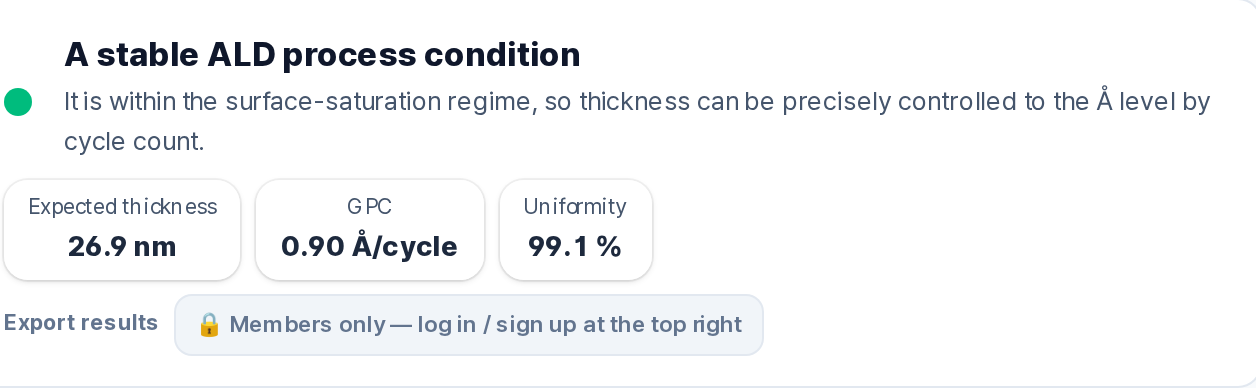
ALD Thickness Non-Uniformity: Check the Definition Before You Compare
Two uniformity numbers on the same screen can come from different formulas. What to check — definition, sample positions, averaging, measured or modelled — before putting any ALD thickness non-uniformity figure next to another.
Chamber-to-Chamber Variation: Why the Same Recipe Lands Differently
A recipe file records setpoints, not the tool it ran on. What chamber-to-chamber variation does to borrowed semiconductor and display process numbers, and what you can state instead.
A Number Without Its Conditions Is Not a Number
Why semiconductor and display process values borrowed from published papers so often fail to reproduce in your chamber — and the rule we adopted after re-reading the full text behind values we had taken from abstracts.